 07 3375 6777
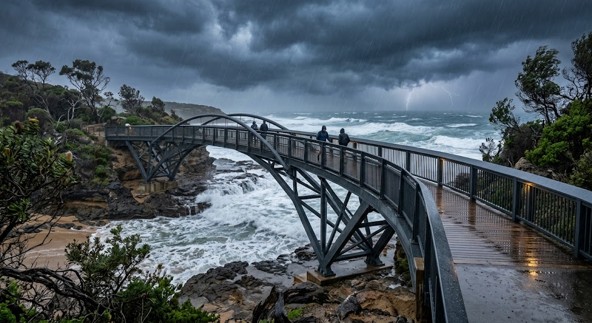
Queensland’s coastal environments present severe durability challenges for public infrastructure. High humidity, constant salt-spray mist, and intense ultraviolet radiation create a harsh setting for metal assets.
Without robust protective coatings, structural steel degrades rapidly. Specifying the correct finish is vital for longevity.
The Threat of Coastal Corrosion on Public Infrastructure
Bridges, pedestrian walkways, lighting columns, and municipal street furniture face relentless exposure. Salt-laden moisture settles on metal surfaces. This triggers rapid oxidation and rust formation.
Left unprotected, structural integrity fails. Public safety risks increase. Maintenance costs skyrocket for local councils and asset owners.
Traditional paint systems often break down under these conditions. They blister, peel, and allow moisture to reach the bare substrate.
Advanced powder coating systems provide a superior defence. They create a seamless, impermeable barrier around complex metal shapes.
Comparing Protective Finishes for Marine Environments
Selecting the right coating system dictates asset lifespan. Different finishes offer varying levels of resistance against moisture, impact, and UV degradation.
| Coating System | Environmental Resistance | Typical Lifespan | Best Application |
| Standard Polyester Powder | Moderate (Interior/Sheltered) | 5 to 10 years | Indoor fittings, protected architectural elements |
| Multi-Stage Marine Grade Powder | High (Coastal and Salt-Spray Zones) | 15 to 25+ years | Coastal bridges, marine boardwalks, handrails |
| Hot-Dip Galvanising & Powder Duo | Exceptional (Submerged/Splash Zones) | 25+ years | Street poles, heavy structural marine piles |
The duplex system—combining hot-dip galvanising with an architectural-grade powder coat—delivers unmatched defence. The galvanised layer acts as a sacrificial anode. The top powder coat shields against chemical and UV attack.
Multi-Stage Pre-Treatment: The Foundation of Longevity
Coating performance relies heavily on preparation. No powder coat survives long on a poorly prepared substrate.
Professional applicators utilize rigorous multi-stage pre-treatment protocols:
- Abrasive Blasting: Removes mill scale, rust, and contaminants, creating an ideal surface profile for mechanical adhesion.
- Chemical Conversion Coating: Applies a corrosion-inhibiting layer (such as zinc phosphate or chromate alternatives) to block under-film corrosion.
- Rinsing Stages: Eliminates soluble salts and residual acids before thermal curing.
Skipping these steps leads to premature coating failure. Specifiers must demand strict adherence to Australian coating standards.
Engineering Standards and Specifier Considerations
Project engineers and architects must account for corrosivity categories defined by ISO 9223. Coastal Queensland often falls within high to very high salinity classifications (C4 and C5).
When drafting specifications, ensure the following parameters are met:
- Alloy Selection: Use marine-grade aluminium or appropriate structural steels.
- Edge Preparation: Grind and radius sharp edges to ensure uniform powder film build.
- Accredited Applicators: Partner with accredited facilities that offer documented quality assurance and warranty backing.
To explore more about our industrial capabilities, read our guide on metal powder coating services. For specialized structural requirements, review our insights on powder coating industrial durability.
Frequently Asked Questions
1. Why is standard powder coating unsuitable for marine bridges?
Standard interior powders lack the chemical structure to resist chloride ion penetration. Salt spray breaks down the resin, leading to sub-film corrosion and peeling within a few years.
2. What is a duplex coating system?
A duplex system combines hot-dip galvanising with an architectural powder coat. The galvanised zinc layer provides cathodic protection, while the outer powder coat prevents zinc oxidation and delivers aesthetic finish options.
3. How long do marine-grade powder coatings last in Queensland?
When applied with a certified multi-stage pre-treatment and marine-grade polyester powder, systems often achieve a maintenance-free lifespan exceeding 15 to 20 years.
4. What pre-treatment is mandatory for coastal steelwork?
Abrasive blast cleaning to ISO 8501-1 Sa 2.5 is essential. This must be followed immediately by a corrosion-resistant conversion primer before the final powder application.
5. How do I verify a coater’s capability for large infrastructure projects?
Check for industry accreditations, compliance with Australian Standards, and verifiable experience in heavy civil assets like commercial powder coating services.
