 07 3375 6777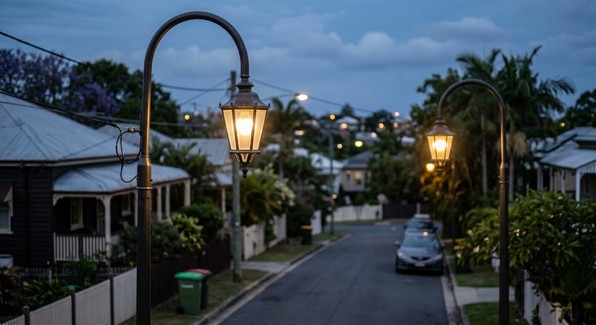
Public infrastructure across South-east Queensland faces some of the most aggressive environmental conditions in the nation. From the corrosive coastal air of Moreton Bay to intense UV radiation and heavy urban transit wear, local government assets require superior surface protection.
For engineers, asset managers, and civil contractors working across South-east Queensland, selecting the right protective coating is critical. Adhering to strict Australian standards and local council specifications ensures long-term performance, reduces maintenance cycles, and protects capital investments.
Why Quality Powder Coating Matters for Public Infrastructure
Powder coating provides a durable, uniform, and environmentally sustainable finish for metal infrastructure. Unlike traditional liquid paint, industrial powder coating relies on electrostatic application followed by high-temperature heat curing. This process fuses the coating into a continuous protective barrier.
Key Benefits for Municipal Assets
- Corrosion Resistance: Shields steel and aluminium components from salt air, humidity, and standing water.
- Impact and Wear Resistance: Resists chipping, scratching, and mechanical damage from road debris and heavy public use.
- UV Stability: Prevents fading, chalking, and degradation under Queensland’s intense sunlight.
- Environmental Compliance: Contains zero volatile organic compounds (VOCs) and creates minimal waste during application.
- Extended Asset Lifespan: Reduces overall lifecycle costs by eliminating frequent repainting schedules.
Key Powder Coating Standards and Specifications
Public works projects require strict adherence to national and international quality frameworks. In Australia, architectural and industrial powder coating standards govern surface preparation, film thickness, adhesion, and atmospheric endurance.
Essential Industry Standards
- AS 3715: Metal finishing — Thermoset powder coatings for architectural aluminium and aluminium alloys.
- AS/NZS 4506: Metal finishing — Thermoset powder coatings for HIGHER CORROSION environments and steel components.
- AS/NZS 2312: Guide to the protection of structural steel against atmospheric corrosion by the use of protective coatings.
- ISO 12944: Paints and varnishes — Corrosion protection of steel structures by protective coating systems.
To explore our full capabilities and compliance certifications, visit www.superiorcoaters.com.au.
Matching Environment to Coating Classes
Selecting the correct powder coating system depends entirely on the atmospheric corrosivity zone where the asset is installed. AS/NZS 2312 classifies atmospheric environments from C1 (very low) to CX (extreme).
The following table details the recommended powder coating systems based on environmental conditions across South-east Queensland:
| Environmental Zone | Typical Brisbane Location | Atmospheric Category | Recommended Coating System | Warranty Expectation |
| Inland / Urban | Ipswich, Toowoomba, Western Suburbs | C2 (Low) to C3 (Medium) | Standard Architectural Polyester | 10–15 Years |
| Sub-Coastal | Brisbane CBD, Hamilton, Chermside | C3 (Medium) to C4 (High) | Advanced Polyester / Epoxy Primer | 15–20 Years |
| Coastal / Marine | Wynnum, Redcliffe, Moreton Bay | C4 (High) to C5 (Very High) | Two-Coat System (Primer + Fluoropolymer) | 20–25+ Years |
| Industrial / Splashing | Port of Brisbane, Water Treatment Works | C5 (Very High) / CX (Extreme) | Zinc-Rich Primer + Super Durable Coating | 25+ Years |
Specific Requirements for Street Poles and Bridge Components
Urban street poles, traffic signal masts, and bridge componentry present unique finishing challenges due to their geometry, size, and exposure to vehicle exhaust.
CRITICAL STAGES OF SPECIFICATION
- Mechanical Abrasive Blast / Chemical Pretreatment
- Application of Corrosion-Inhibiting Epoxy Primer
- Electrostatic Application of Super Durable Topcoat
- Controlled Thermal Curing Cycle
- Quality Assurance Inspection & Coating Thickness Audit
Street Poles and Lighting Standards
Streetlight poles and traffic masts are subject to constant vibration, road grime, and extreme weather.
- Pretreatment must include abrasive blasting (Class 2.5) or multi-stage chemical washing to remove all mill scale and contaminants.
- High-volume batch ovens are required to accommodate long or complex pole fabrications.
- To review our specialized infrastructure capabilities, check our structural steel services.
Bridge Components and Heavy Infrastructure
Bridge handrails, structural brackets, and barrier systems demand maximum edge coverage and corrosion protection.
- Primer Coat: An epoxy or zinc-rich primer provides cathodic protection against moisture ingress.
- Top Coat: A super durable architectural polyester or fluoropolymer topcoat provides long-term colour and gloss retention.
- Film Thickness: Total dry film thickness (DFT) must be carefully measured to ensure complete coverage without sagging or cracking.
Best Practices for Asset Managers and Contractors
Achieving long-term coating performance requires close collaboration between the design engineer, fabricator, and commercial powder coater.
- Design for Powder Coating: Ensure fabrications feature drain holes for pretreatment fluids and avoid sharp edges that cause thin coating coverage.
- Specify Accredited Applicators: Always work with certified applicators who maintain rigorous quality control logs and calibrated testing equipment.
- Verify Pretreatment Standards: Surface preparation is responsible for over 80% of coating failures. Ensure full compliance with abrasive blasting specifications.
- Implement Routine Maintenance: Establish a scheduled washing program using clean water and mild detergents to remove salt accumulation and industrial residue.
For tailored technical advice or project quotes, contact our team via www.superiorcoaters.com.au.
Frequently Asked Questions
What is the expected lifespan of powder-coated street poles in Brisbane?
When applied correctly using a dual-coat primer and super durable topcoat system, powder-coated street poles in standard urban environments typically last 15 to 25 years before requiring major maintenance or recoating.
Why is pretreatment so important for public works powder coating?
Pretreatment cleans the metal substrate, removes oxidation, and creates a microscopic profile for the powder to adhere to. Without proper pretreatment, moisture can penetrate the coating, leading to premature flaking, blistering, and corrosion under the film.
Can galvanized steel bridge components be powder coated?
Yes. Powder coating over hot-dip galvanized steel—known as a duplex system—provides exceptional corrosion resistance. The surface must be lightly sweep-blasted or chemically degassed to ensure proper adhesion and prevent pin-holing during curing.
How does Brisbane’s coastal climate affect powder coating selection?
Brisbane’s high humidity, strong UV levels, and proximity to salt air accelerate coating degradation. Projects within 5 kilometres of salt water require specialized multi-coat systems, such as an epoxy primer combined with an ultra-durable topcoat, to meet warranty requirements.
What quality assurance documentation should be provided for public infrastructure projects?
A professional applicator should provide a comprehensive quality assurance (QA) package. This includes surface profile reports, dry film thickness (DFT) readings, cross-hatch adhesion testing records, and manufacturer warranty certificates.
