 07 3375 6777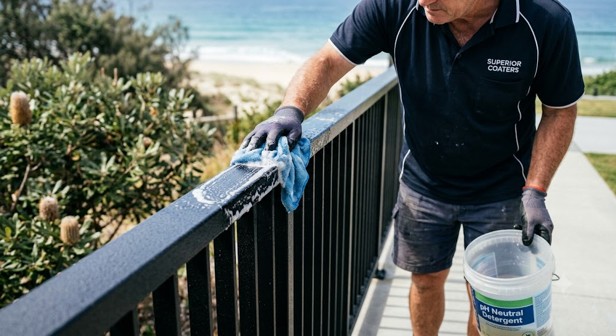
Powder coating provides a durable, corrosion-resistant finish for architectural and commercial metal installations across Australia. However, exposure to harsh environmental factors like coastal salt spray, industrial pollutants, and airborne dust can degrade its protective layer over time. Regular cleaning is essential to preserve both the appearance and the lifespan of your powder-coated surfaces.
This comprehensive guide covers best practices for maintaining powder-coated metalwork, step-by-step cleaning procedures, inspection routines, and touch-up methods.
Why Regular Maintenance Is Essential
Although powder coating outperforms traditional liquid paint in durability, surface contaminants build up over time. When exposed to moisture and salt, trapped debris accelerates oxidation, leading to premature chalking, loss of gloss, and localised corrosion.
Regular maintenance delivers three core benefits:
- Preserves Visual Finish: Prevents stubborn grime build-up and maintains original colour integrity.
- Extends Service Life: Removes corrosive salts and atmospheric chemicals before they penetrate the coating.
- Maintains Warranty Compliance: Many leading coating manufacturers require documented cleaning schedules to honour structural finish warranties.
Approved Cleaning Materials vs. Harmful Chemicals
Using the wrong cleaning products can scratch, dull, or chemically break down powder coating finishes. Always select gentle, non-abrasive agents.
|
Item Category |
Safe to Use |
Avoid Completely |
|
Cleaning Agents |
Mild pH-neutral detergents, warm pure water, specialised soft soaps |
Abrasive powders, harsh solvents (acetone, MEK), heavy-duty acids or alkalis |
|
Tools & Applicators |
Soft microfiber cloths, non-abrasive sponges, soft natural-bristle brushes |
Steel wool, wire brushes, abrasive scouring pads, high-pressure washers |
|
Method |
Gentle hand washing followed by thorough rinsing with clean freshwater |
Dry wiping (scratches surface), steam cleaning, intense high-pressure blasting |
Pro Tip: Never use commercial paint thinners or acetone to remove spots on powder-coated metal. Solvents permanently soften the resin matrix, leading to finish breakdown.
Step-by-Step Cleaning Guide
Follow these steps to safely clean residential, commercial, or industrial powder-coated metalwork.
1. Pre-Rinse the Surface
Rinse the metal thoroughly with fresh, clean water to wash away loose dust, dirt, and grit. Skipping this step risks dragging dirt particles across the coating, creating micro-scratches.
2. Prepare the Cleaning Solution
Mix a small amount of mild, pH-neutral dishwashing liquid or specialised coating cleaner into a bucket of warm water. Avoid overly concentrated mixtures.
3. Wipe Down Lightly
Dip a soft microfiber cloth or non-abrasive sponge into the soapy water. Gently wipe the powder-coated surfaces using light, circular motions. Work from top to bottom on vertical structures like gates and window frames.
4. Rinse with Fresh Water
Rinse the surface thoroughly using clean water immediately after washing. Ensure no soap residue remains, as dried soap film attracts dirt and creates unsightly streaking.
5. Dry the Metalwork
Allow the surface to air-dry or wipe it gently with a dry microfiber towel to prevent water spots, particularly in areas with hard water.
Recommended Cleaning Schedule
Location dictates the required frequency of cleaning. Environmental exposures such as high humidity, salt air, and industrial pollution require more frequent washdowns.
- Inland / Rural Areas (Low Risk): Clean every 6 to 12 months.
- Urban / Suburban Areas (Moderate Risk): Clean every 3 to 6 months.
- Coastal / Industrial Locations (High Risk): Clean every 1 to 3 months. Salt deposits must be washed away regularly to prevent pitting corrosion.
How to Handle Touch-Ups and Minor Repairs
Minor chips and surface scratches can occasionally occur from impact or installation wear. Addressing these promptly prevents moisture from migrating beneath the surrounding coating.
- Step 1: Inspect and Clean: Identify damage early. Thoroughly clean the surrounding area using mild soapy water and let it dry completely.
- Step 2: Smooth the Edges: Gently feather the edges of the scratch using fine-grit sandpaper (400-grit or higher) to ensure seamless adhesion. Clean away all sanding dust.
- Step 3: Apply Touch-Up Paint: Apply a compatible air-dry touch-up paint matching the original colour and sheen level. Use a fine brush to apply thin, even coats rather than one thick layer.
- Step 4: Seal and Cure: Allow the touch-up coat to fully cure according to the manufacturer’s instructions before exposing the surface to heavy moisture or abrasion.
For severe impact damage, large structural repairs, or full recoating requirements, consult an industrial coating specialist to ensure structural integrity and seamless colour blending.
Frequently Asked Questions
1. Can I use a pressure washer on powder-coated metalwork?
High-pressure power washing is not recommended. Intense pressure can force water behind edge seals or lift minor imperfections, causing peeling. If you use a hose, keep water pressure low to moderate and use standard tap attachments.
2. How do I remove stubborn residue like tree sap or grease?
Use a soft cloth dampened with pure isopropyl alcohol or methylated spirits. Test a small, hidden section first to ensure no colour transference or dulling occurs, then gently wipe the spot and rinse immediately with fresh water.
3. Why does my powder coating look chalky, and can it be fixed?
Chalking occurs when prolonged UV exposure breaks down the surface resins, leaving a powdery white residue. You can wash away light chalking using mild soap and warm water. For heavier chalking, applying an approved non-abrasive marine polish can temporarily restore gloss and colour depth.
4. How often should coastal powder-coated installations be inspected?
Powder-coated installations situated within 1–2 kilometres of coastal waters should be inspected quarterly. Salt air rapidly accelerates oxidation wherever raw metal edges or deep scratches are exposed.
5. What should I do if rust begins to show through the coating?
Visible rust indicates the protective coating barrier has been breached. Scrape away all flaking coating and loose rust using a wire brush or sandpaper down to bare metal. Treat the area with a rust-inhibiting primer before applying a matching protective topcoat.
