 07 3375 6777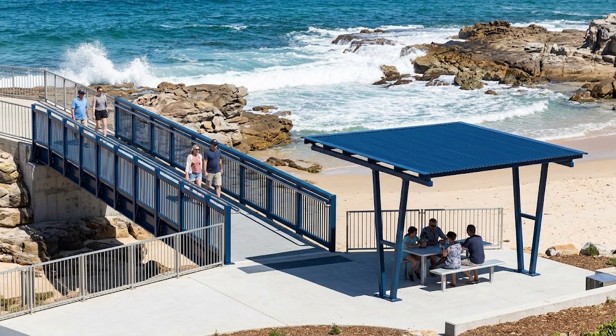
Providing long-term resistance in harsh marine environments relies on a rigorous multi-layer process.
1. Advanced Pre-Treatment Operations
Proper surface preparation forms the foundation of all durable coatings.
- Abrasive Blasting: Removes mill scale, rust, and surface contaminants while creating an anchor profile for adhesion.
- Chemical Degreasing: Removes oils, lubricants, and airborne particulate matter.
- Conversion Coatings: Applies zirconium or chromate pre-treatments to enhance bonding and suppress corrosion under the film.
2. High-Performance Epoxy Primers
Primers block moisture migration to the bare substrate.
- Barrier Protection: Seals the prepared surface completely against moisture and salt ingress.
- Cathodic Protection: Zinc-rich primers offer sacrificial protection to prevent corrosion if the topcoat becomes scratched.
3. Architectural-Grade Powder Topcoats
The outer topcoat provides essential resistance against ultraviolet rays, weather exposure, and surface wear.
- Super durable Fluoropolymers: Retain colour, finish quality, and gloss stability under high solar exposure.
- Thick-Film Application: Provides a uniform barrier without thin edges or runs.
Key Applications Across Coastal Projects
Strategic metal protection supports longevity across critical public and commercial infrastructure:
- Civil Infrastructure: Pedestrian bridges, road safety gantries, light poles, and traffic barriers.
- Architectural Elements: Louvre systems, structural columns, external cladding frames, and custom facades.
- Perimeter Security: High-durability boundary protection, gates, and commercial fence powder coating services.
- Shade Structures: Park amenities, oceanfront pavilions, and large-scale public outdoor frame assemblies.
Best Practices for Specifying Protective Finishes
Project engineers, specifiers, and asset managers should implement clear standards to maintain structural longevity:
- Classify Atmospheric Corrosivity: Reference standard marine classifications (such as C4 or C5-M high-corrosion zones).
- Specify Accredited Applicators: Work exclusively with certified applicators who adhere to strict quality control standards.
- Mandate Multi-Layer Systems: Require compatible primer and topcoat combinations tailored for marine environments.
- Implement Maintenance Cycles: Schedule regular freshwater washdowns to remove accumulated salt deposits.
Frequently Asked Questions
Why is standard powder coating insufficient for coastal environments?
Standard single-coat powder systems lack the barrier thickness and specialized primers needed to block aggressive marine salts. Coastal projects require multi-stage pre-treatments, zinc-rich or epoxy primers, and super durable architectural topcoats to stop salt migration to the metal substrate.
How does marine-grade pre-treatment improve coating adhesion?
Marine-grade pre-treatment cleans the metal, removes surface oxides, and creates a chemical conversion layer. This profile prevents blistering, under-film corrosion, and flaking when exposed to salt-laden air and high humidity.
What is the advantage of duplex protection systems?
Duplex systems combine hot-dip galvanizing with a high-performance powder coating topcoat. This combination provides dual protection, extending the maintenance lifecycle up to 2.5 times longer than using either method alone.
How frequently should coastal metal coatings be cleaned?
Outdoor infrastructure within 1 kilometre of salt water should be washed down with clean, fresh water every 3 to 6 months. Regular maintenance removes accumulated salts, prevents chemical corrosion, and maintains topcoat gloss and colour.
Which architectural standards govern coastal powder coating applications?
High-durability coastal applications rely on rigorous standards, including AS 3715 for architectural aluminium and AS 4506 for metal finishing. These standards specify layer thickness, salt-spray resistance, impact performance, and long-term weatherability requirements.
