 07 3375 6777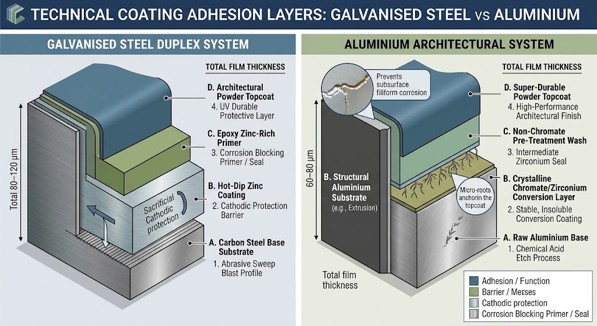
Selecting the correct protective finish for structural metalwork determines whether a project maintains structural integrity for decades or fails prematurely due to corrosion. In Australian coastal and industrial environments, exposed steel and aluminium face severe atmospheric degradation. Both substrate materials require tailored pre-treatment protocols, proper film thickness, and precise thermal curing to achieve maximum service life.
This technical guide compares powder coating applications for galvanised steel versus aluminium, outlining essential pre-treatment requirements, cured film metrics, and best practice quality standards.
Substrate Characteristics and Corrosion Mechanics
Galvanised steel and structural aluminium offer distinct mechanical properties and corrosion mechanisms that dictate how surface coatings bond and perform over time.
- Galvanised Steel: A sacrificial zinc layer protects the underlying carbon steel base. However, raw zinc oxidizes rapidly, forming zinc white rust if unsealed. Powder coating galvanised steel creates a duplex system, where the powder topcoat shields the zinc, and the zinc acts as secondary cathodic protection.
- Structural Aluminium: Raw aluminium naturally develops a micro-thin oxide film that prevents rapid rust. However, in marine or industrial zones, airborne chlorides attack this passive layer, causing severe pitting corrosion and subsurface filiform corrosion beneath uncertified paint systems.
Comparative Performance Metrics: Galvanised Steel vs. Aluminium
Understanding key performance parameters ensures compliance with relevant Australian Standards and long-term durability in harsh environments.
| Performance Metric | Powder Coated Galvanised Steel | Powder Coated Aluminium |
| Primary Corrosion Mechanism | White rust / Zinc oxidation under film failure | Pitting and filiform corrosion in high-salinity zones |
| Pre-Treatment Necessity | Mechanical sweep blasting + Degassing | Multi-stage chemical conversion or zirconium wash |
| Outgassing Risk | High (trapped air/moisture in porous zinc) | Very Low |
| Standard Film Thickness | 80–120 microns (over zinc layer) | 60–80 microns |
| Applicable Standards | AS 4506 (Metal finishing) | AS 3715 (Architectural aluminium) |
| Primary Structural Uses | Light poles, heavy structural steel, lintels | Window frames, shade structures, architectural louvres |
Pre-Treatment Protocols: Preparing the Surface
Adhesion failure in powder coating rarely stems from the powder itself; over 90% of coating failures trace back to inadequate surface preparation.
Preparing Galvanised Steel (Preventing Pinholes and Outgassing)
Galvanised zinc coatings retain trapped air and moisture within microscopic pores. Heating the metal in a powder curing oven causes trapped gases to expand, bubbling through the melting powder and causing pinholes.
- Degreasing: Clean the surface using alkaline solvents to clear surface oils and mill contaminants.
- Sweep Blasting: Lightly blast the surface with a non-metallic abrasive (such as garnet) at low pressure. This removes zinc surface oxides and creates a mechanical profile without stripping the underlying zinc layer.
- Outgassing / Degassing Thermal Cycle: Pre-heat the galvanised steel component in an oven at temperatures above the final powder cure temperature (typically 210°C–220°C). This forces trapped moisture and gases out before powder application.
- Zinc-Rich Primer Application: Apply an epoxy zinc-rich primer seal to block remaining porosity and enhance cathodic resistance.
For specialized guidance on avoiding critical processing errors during surface preparation, review our 5 Coating Mistakes Businesses Must Avoid to safeguard your structural steel investments.
Preparing Structural Aluminium (Preventing Filiform Corrosion)
Aluminium requires specialized chemical pre-treatment to etch the raw metal and build a uniform adhesion bridge.
- Acidic or Alkaline Cleaning: Removes manufacturing oils, grease, and shop dust.
- Acid Etch: Removes the inconsistent natural oxide layer to expose fresh, reactive aluminium.
- Chromate or Non-Chromate (Zirconium) Conversion: Builds a stable conversion layer that locks the topcoat to the substrate and stops filiform corrosion from spreading if the surface is scratched.
- Deionised Water Rinse: Flushes residual ions to prevent moisture-triggered blistering beneath the cured resin.
For detailed criteria on selecting appropriate industrial protection systems across varied substrates, consult our guide on Choosing Lasting Protection Systems.
Curing, Large Component Capabilities, and Quality Control
Curing heavy structural steel and oversized aluminium profiles requires precise thermal management. Large structural items demand uniform heat distribution to ensure complete resin cross-linking across every section of the workpiece.
- Thermal Mass Management: Heavy galvanised steel beams take significantly longer to reach peak curing temperature (e.g., 180°C–200°C metal temperature) than light aluminium extrusions. Inadequate thermal soak results in brittle coatings prone to flaking.
- Large Capacity Processing: Coating extended structural items like lighting columns or portal frames requires dedicated high-capacity infrastructure. Utilizing specialized 14-Metre Powder Coating for Infrastructure capabilities eliminates the need for field splicing, preserving a continuous factory-applied protective shell.
- Quality Assurance Testing: Finished components undergo mandatory adhesion testing (cross-hatch test), film thickness measurement using magnetic/eddy-current gauges, and gloss level verification.
To understand the key variables involved in achieving defect-free surface finishes on structural profiles, explore our article on 5 Keys to Flawless Results.
Architectural Compliance and Environmental Ratings
Selecting the right powder coating formulation depends on the installation environment and project specifications.
- Coastal & Marine (C4–C5 Exposure): Coastal infrastructure requires high-durability fluoropolymer or super-durable polyester powders applied over accredited pre-treatment systems.
- Standards Compliance: Architectural specifications across Australia must comply with AS 3715 for aluminium and AS 4506 for general metal finishing. For a comprehensive overview of updated regulatory standards for specifiers and builders, review our AS 3715 2025 Guide.
- Specialized Coatings: For public infrastructure exposed to vandalism, integrating specialized finishes like Anti-Graffiti Powder Coatings allows easy cleaning without damaging the protective base layer.
- Colour and Texture Selection: Choosing the correct finish profile affects maintenance requirements, heat absorption, and overall aesthetic longevity. Learn more about selecting appropriate formulations in our guide on how to Choose the Right Powder Coating Finish.
Frequently Asked Questions
Can you powder coat hot-dip galvanised steel without pre-treatment?
No. Applying powder directly over raw galvanised steel without sweep blasting and degassing leads to severe adhesion failure, pinholing, and peeling. Proper mechanical profiling and thermal outgassing are mandatory steps for a durable duplex system.
Which substrate lasts longer in coastal environments: galvanised steel or aluminium?
When correctly pre-treated and powder coated, both materials offer excellent service life. However, powder-coated marine-grade aluminium typically provides superior resistance to structural rust in high-salinity coastal zones, whereas galvanised steel offers greater mechanical impact resistance for heavy-duty structural applications.
What causes pinholes in powder-coated galvanised steel?
Pinholes occur when gases or moisture trapped within the porous zinc layer expand during the high-temperature oven curing process. Pre-heating the metal before applying powder vents these gases, preventing bubbles from bursting through the curing finish.
What film thickness is recommended for structural powder coating?
Standard structural aluminium applications typically require a film thickness of 60 to 80 microns. Galvanised steel applications generally require 80 to 120 microns (including primer coats) to ensure complete coverage over the textured zinc profile.
Do galvanised steel and aluminium use the same powder formulations?
Yes, high-durability polyester, epoxy, and fluoropolymer powders can be applied to both substrates. However, the pre-treatment chemistry and primer requirements differ significantly between galvanised steel and aluminium.
