 07 3375 6777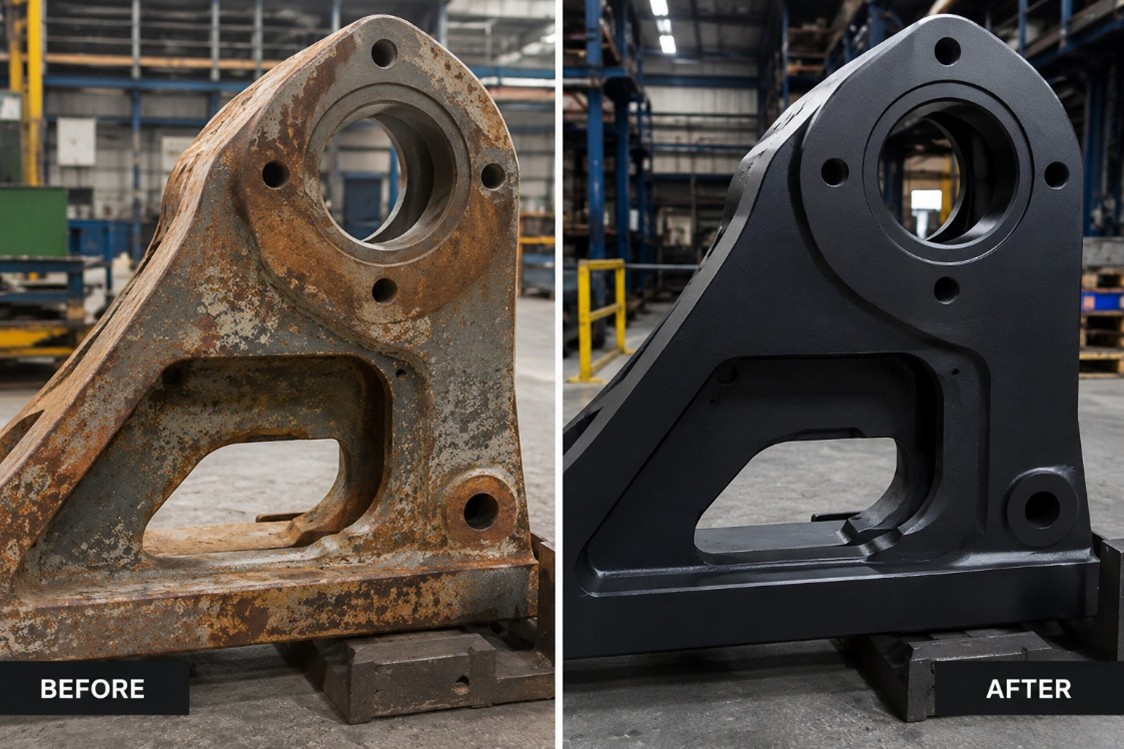
Managing commercial metal infrastructure requires balancing operational performance with budget control. Exposure to harsh weather, industrial wear, and atmospheric pollution degrades metal assets over time. Structural steel, security fencing, machinery, and architectural louvres inevitably fade, corrode, or chip.
While full replacement has historically been the standard solution, restoring assets through professional re-powder coating is now the preferred maintenance strategy.
1. Cost Comparison: Total Replacement vs. Re-Powder Coating
Total asset replacement incurs significant hidden expenses beyond the cost of new materials. Re-powder coating eliminates most of these logistical burdens.
Cost Factors Breakdown
|
Expense Category |
Total Replacement |
Re-Powder Coating Restoration |
|
Material Costs |
Pays for full fabrication of raw metals |
Reuses existing structural substrate |
|
Labour & Demolition |
High costs to dismantle and remove structures |
Minimal removal required; on-site preparation where applicable |
|
Disposal & Tipping |
High commercial waste and recycling fees |
Zero tipping fees; materials are retained |
|
Supply Chain & Logistics |
Freight costs and long manufacturing lead times |
Fast local turnaround times |
|
Site Downtime |
Extended operational disruption during installation |
Minimal operational downtime |
On average, re-powder coating existing metal infrastructure costs a fraction of the price of replacement. This allows facility managers to reallocate capital expenditure (CapEx) to core business activities.
2. The Sustainability Advantage: Driving the Circular Economy
Replacing metal assets generates significant carbon emissions and landfill waste. Choosing to powder coat existing infrastructure supports circular economy principles by extending asset lifecycles.
Environmental Benefits
- Landfill Reduction: Retains structural metal components and prevents salvageable steel from entering the waste stream.
- Lower Carbon Footprint: Avoids the energy-intensive manufacturing process required for virgin steel and aluminium production.
- Zero VOCs: Modern industrial powder coatings contain no volatile organic compounds (VOCs) and release zero hazardous air pollutants.
3. Candidate Checklist: What Assets Can Be Restored?
Deciding whether to restore or replace comes down to structural integrity versus surface degradation.
High-Value Candidates for Restoration
- Security & Perimeter Fencing: Gates, bollards, and boundary fences weathered by UV exposure.
- Structural Steel: Exposed beams, gantry frameworks, and support structures needing atmospheric protection.
- Architectural Elements: Aluminium louvres, window frames, cladding panels, and building facades.
- Industrial Equipment: Heavy-duty racking, machinery casings, and factory fixtures.
- Public Infrastructure: Balustrades, handrails, public seating, and park amenities.
4. The 3-Step Refurbishment Process
Achieving a durable finish relies on thorough surface preparation prior to application.
- Industrial Abrasive Blasting: Strips away old coatings, heavy corrosion, and mill scale. Leaves a micro-textured profile for optimal coating adhesion.
- Chemical Pre-Treatment: Removes microscopic residues and applies a zinc-rich primer or chemical conversion layer to prevent corrosion.
- Electrostatic Application & Curing: Dry powder is applied electrostatically and thermally fused in a curing oven at 180°C to 200°C to create a flexible, protective shield.
Frequently Asked Questions
1. How do I know if an asset should be restored or replaced?
If the underlying metal retains its structural integrity, it is a candidate for restoration. If deep corrosion or rust-through has compromised the load-bearing capacity or safety of the asset, replacement is required.
2. How long does a re-powder coated finish last?
When properly pre-treated with industrial abrasive blasting, high-quality re-powder coating can extend the service life of an asset by 10 to 20 years, depending on environmental exposure.
3. Is re-powder coating environmentally friendly?
Yes. Re-powder coating reuses existing materials to keep waste out of landfills. Additionally, powder coatings produce zero VOCs and emit no hazardous air pollutants during application.
4. Can you powder coat directly over existing paint or rust?
No. Fresh powder coating requires bare metal for mechanical adhesion. Existing paint, rust, and surface contaminants must first be completely removed using abrasive blasting and chemical pre-treatment.
5. What commercial items are best suited for re-powder coating?
Common items include perimeter fencing, structural steel beams, architectural louvres, warehouse racking, machinery casings, and public balustrades.
Interested in exploring specific project guidelines? Read our recent guides on specifying powder coating for structural galvanized steel or learn about logistics for large-scale infrastructure powder coating. To discuss your project, contact Superior Coaters today.
